
AI Employees
AI employees vs. human employees: what do AI agents really achieve?
The new world of work between human and machine
The world of work is undergoing its greatest change since the industrial revolution. Artificial intelligence is long no longer a topic for the future: it is reality. Companies in every sector face the question: which tasks can AI employees take on? And where does the human remain indispensable?
The discussion is often conducted emotionally. On one side there are fears: will AI agents destroy human jobs? On the other side there are excessive expectations: can artificial intelligence really do everything better, faster and more cheaply?
The truth lies, as so often, in the middle. But to make well-founded decisions for your own company, you need a clear understanding of what AI employees can actually achieve, where their limits lie and what the best interplay between human and machine looks like.
This article provides an honest analysis: no marketing exaggerations, no scaremongering, but a factual look at the strengths and weaknesses of both sides.
What are AI employees and AI agents?
Before we start the comparison, we need to clarify what we even mean by AI employees. The term is used excessively, but there are considerable differences.
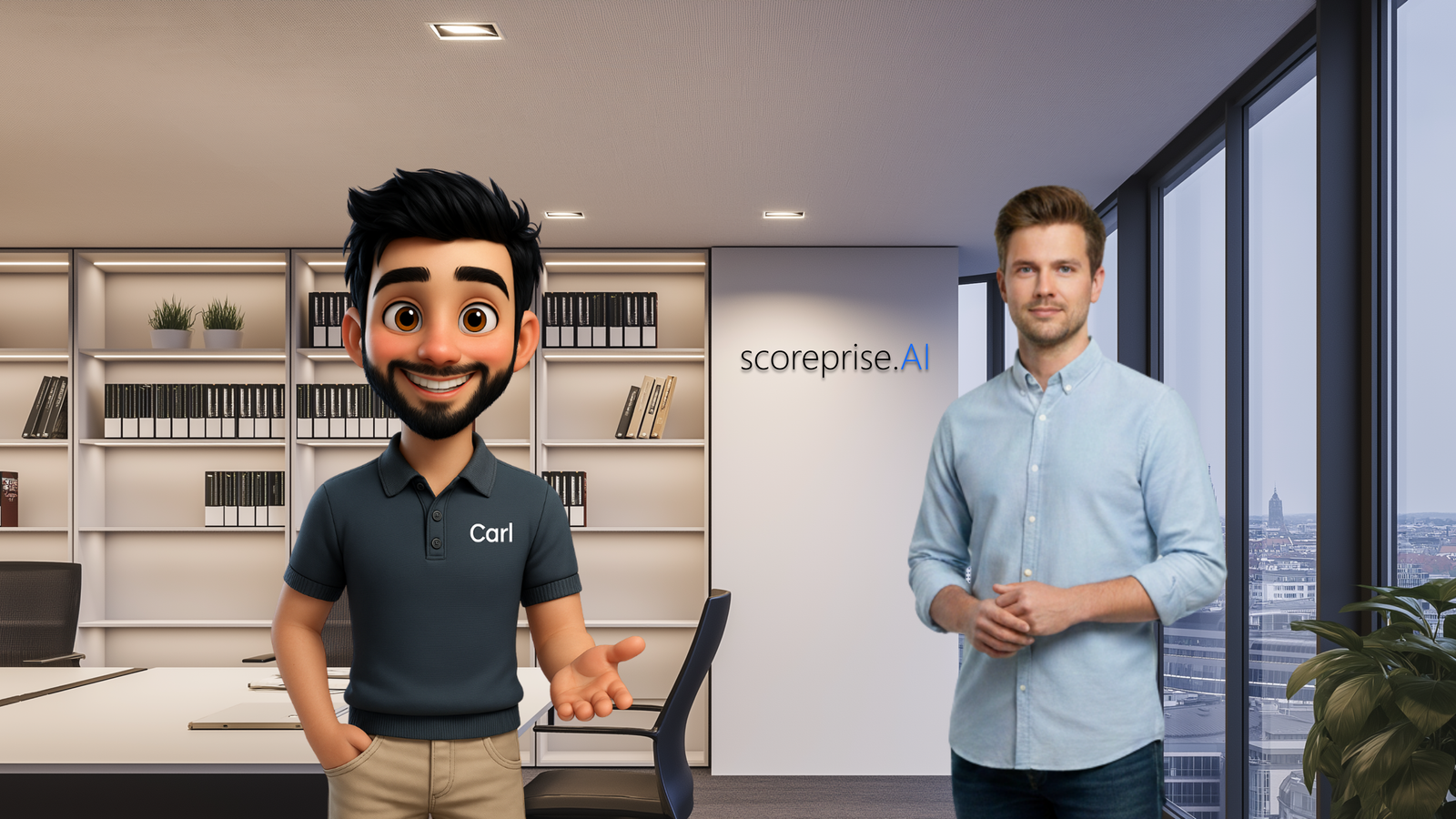
From chatbot to autonomous AI agent
The first generation of AI automation consisted of rule-based systems: simple chatbots that responded to predefined inputs with fixed answers. These systems were useful, but limited.
Today's generation of AI agents, or digital employees, is fundamentally different. They are based on Large Language Models (LLMs) and can:
Communicate and understand in context
Make decisions independently within defined parameters
Interact with various systems and data sources
Learn from feedback and improve continuously
Work through complex, multi-stage tasks autonomously
A modern AI employee is not a tool that you operate: it is an agent that receives tasks and completes them independently. The difference is comparable to that between a calculator and an accountant: the calculator carries out the calculations you give it. The accountant understands the overall picture and acts independently.
Role-based AI employees in practice
Modern companies do not use AI employees as an all-purpose solution, but as specialised role holders. Each AI agent has a clearly defined area of responsibility, specific competencies and measurable goals.
A Sales Assistant, for example, focuses on supporting the sales team: lead research, data enrichment, meeting preparation and CRM maintenance. An Outbound Manager takes on the systematic initial approach to target customers via email and LinkedIn. A Competitor Analyst carries out continuous competitor monitoring and delivers strategic insights.
This specialisation is decisive. It is precisely in the focus on clearly defined areas of responsibility that AI employees develop their full effect.
The strengths of AI employees: where AI agents are superior
Artificial intelligence has clear advantages over human employees in certain areas. Understanding these strengths is the first step towards intelligent use.
Scalability without limits
A human employee can research a limited number of leads, make a limited number of calls or send a limited number of emails per day. At some point the capacity limit is reached, no matter how motivated or efficient the person is.
AI employees do not know this limit. An AI agent for lead generation can analyse, enrich and qualify hundreds or thousands of companies per day. The scaling is linear: double the volume does not require double the resources, only more computing capacity.
For growth-oriented companies this is a decisive advantage. The sales pipeline no longer has to be limited by staff shortages.
Consistency and accuracy in repetitive tasks
People make mistakes, especially in monotonous, repetitive activities. After the hundredth data entry, concentration drops. After the two hundredth cold call, quality declines. That is not a weakness, but human nature.
AI employees deliver the same quality on the thousandth task as on the first. They do not get tired, impatient or distracted. Consistency remains constant.
Especially in processes that require high accuracy, such as data reconciliations, compliance checks or systematic research, this reliability is worth its weight in gold.
Availability around the clock
AI employees work 24 hours a day, 7 days a week, 365 days a year. No holiday cover, no sick days, no overtime arrangements.
For companies operating internationally this means: time zone differences are no longer an obstacle. While the German team sleeps, the AI agent can work on leads in Asia or America. The next morning the results are ready.
Speed in processing information
The analysis of a company, including financial metrics, staff development, news situation, technology stack and competitive position, can cost a human analyst hours. An AI employee completes the same task in minutes.
This speed enables entirely new ways of working. Instead of intensively researching a single selected lead, sales can now have hundreds of potential customers analysed at the same time and concentrate on the most promising ones.
Data-driven objectivity
Human decisions are influenced by experience, prejudices and daily form. An experienced salesperson has a "gut feeling", sometimes right, sometimes wrong.
AI employees work purely on the basis of data. They assess leads according to objective criteria, without being influenced by sympathy or antipathy. This does not mean that AI agents are always right, but their decisions are traceable and reproducible.
The strengths of human employees: where the human remains indispensable
For all the enthusiasm about AI automation, there are areas in which human employees cannot be replaced, and probably cannot be replaced in the foreseeable future either.
Genuine empathy and emotional intelligence
AI can sound empathetic. It can choose phrasing that signals understanding. But it cannot really feel.
In sensitive situations, a customer who is frustrated, an employee with personal problems, a business partner who wants to build trust, genuine human contact makes the difference. People sense authenticity.
For all situations in which emotional connection is business-critical, the human remains indispensable.
Creativity and innovation
AI systems are excellent at recognising and applying existing patterns. They can create, optimise and combine variations. But creating something genuinely new, ideas that have never existed before, that remains a human domain.
The spark of a business idea, the creative campaign, the unconventional solution to a problem: they arise in the human mind, not in neural networks.
Complex negotiations and building relationships
Closing a large deal, negotiating strategic partnerships, building long-term customer relationships: all of this requires human presence.
Trust does not arise through algorithms. It arises through personal encounters, through the feeling of being understood, through experiences lived through together. An AI employee can prepare the path to the close: the close itself is made by the human.
Strategic decisions under uncertainty
AI makes decisions on the basis of data. But what if the data is unclear? What if decisions have to be made under high uncertainty? What if there are no historical patterns because the situation is entirely new?
Strategic leadership requires judgement, a willingness to take risks and the assumption of responsibility. These are human qualities.
Ethical considerations and value judgements
Which customers do we want to have? How do we treat employees? What social responsibility do we bear? These questions cannot be answered algorithmically.
Value judgements require a moral awareness that AI systems do not possess. The decision about what is right and wrong must remain with the human.
The best interplay: human and AI as a team
The question "AI employees or human employees?" is wrongly posed. The right question is: how do we shape the best interplay?
The division of labour of the future
The most successful model is a clear division of labour by strengths:
AI employees take on:
Repetitive, high-volume tasks
Data research and enrichment
Systematic initial approach and follow-ups
Monitoring and alerting
Standardised analyses and reports
24/7 availability for defined processes
Human employees concentrate on:
Strategic decisions
Complex negotiations and closes
Creative problem-solving
Building relationships and maintaining networks
Leadership and mentoring
Ethical considerations
A practical example: the sales process
Let us look at the typical sales process of a B2B company:
Phase 1: lead generation and qualification
An AI employee such as Carl, the Sales Assistant, identifies potential customers, enriches their data, assesses relevance according to defined criteria and creates a prioritised ranking. What used to take days now happens in hours.
Phase 2: initial approach
The Outbound Manager takes on the systematic, personalised initial approach via email and LinkedIn. Each message is individually worded, but the process is automated. Hundreds of potential customers are contacted at the same time.
Phase 3: interest qualification
Responses are classified automatically: positive interest, queries, rejections. Meetings are booked automatically. The human salesperson receives only the qualified leads, prepared with all the relevant information.
Phase 4: conversation and close
Now the human comes into play. The personal conversation, the individual needs analysis, the negotiation, the close: this is done by the experienced salesperson. But they do it with maximum efficiency, because they now concentrate only on the promising contacts.
The result: the human employee spends their time where they make the greatest contribution to value, in personal contact with qualified prospects. The AI does all the preparatory work.
What do AI agents really achieve? An honest assessment
After this analysis we can answer the opening question: what do AI employees really achieve?
They achieve a great deal, in the right area of use
AI employees can greatly increase the efficiency and effectiveness of business processes. They make possible things that would not be economically feasible with human resources alone: comprehensive market monitoring, systematic lead outreach on a large scale, continuous data analysis around the clock.
For companies this means in concrete terms:
More output with the same or fewer resources
Higher quality through consistency and error reduction
Faster reaction times to market changes
Better bases for decisions through more comprehensive analyses
Freeing up human capacity for value-adding activities
They do not replace people, they change roles
AI employees do not replace the salesperson, the marketing manager or the analyst. They change their role. The salesperson moves from cold caller to relationship manager. The marketing manager moves from content producer to strategist. The analyst moves from data collector to interpreter.
This shift in roles requires adjustment, but for most people it is an improvement. Who wants to carry out monotonous tasks when they can work strategically instead?
They are not a miracle weapon, but a real competitive advantage
AI employees do not solve every problem. They require implementation, integration and continuous management. They make mistakes, different from those of humans, but mistakes nonetheless. They are not a "set and forget" solution.
But companies that use AI employees intelligently have a real competitive advantage. They can work on more leads, react faster to signals, make better decisions, and do so at lower cost.
The future belongs to collaboration
The question "AI employees vs. human employees" suggests a conflict that does not exist in that form. The most successful companies of the future will not be those that automate the most, nor those that forgo automation.
The winners will be those who best orchestrate the interplay between human and machine. Those who understand which tasks AI should take on and which it should not. Those who free their human employees from routine tasks so that they can do what people do best: think creatively, build relationships, make strategic decisions.
AI employees are not competition for human employees: they are their most powerful tools.
The companies that understand and act on this will build up a considerable lead in the coming years. All the others will have to watch as the competition achieves considerably more with the same team.
The question is no longer whether your company will use AI employees. The only question left is: when, and how well?
Related posts
 scoreprise
Blog
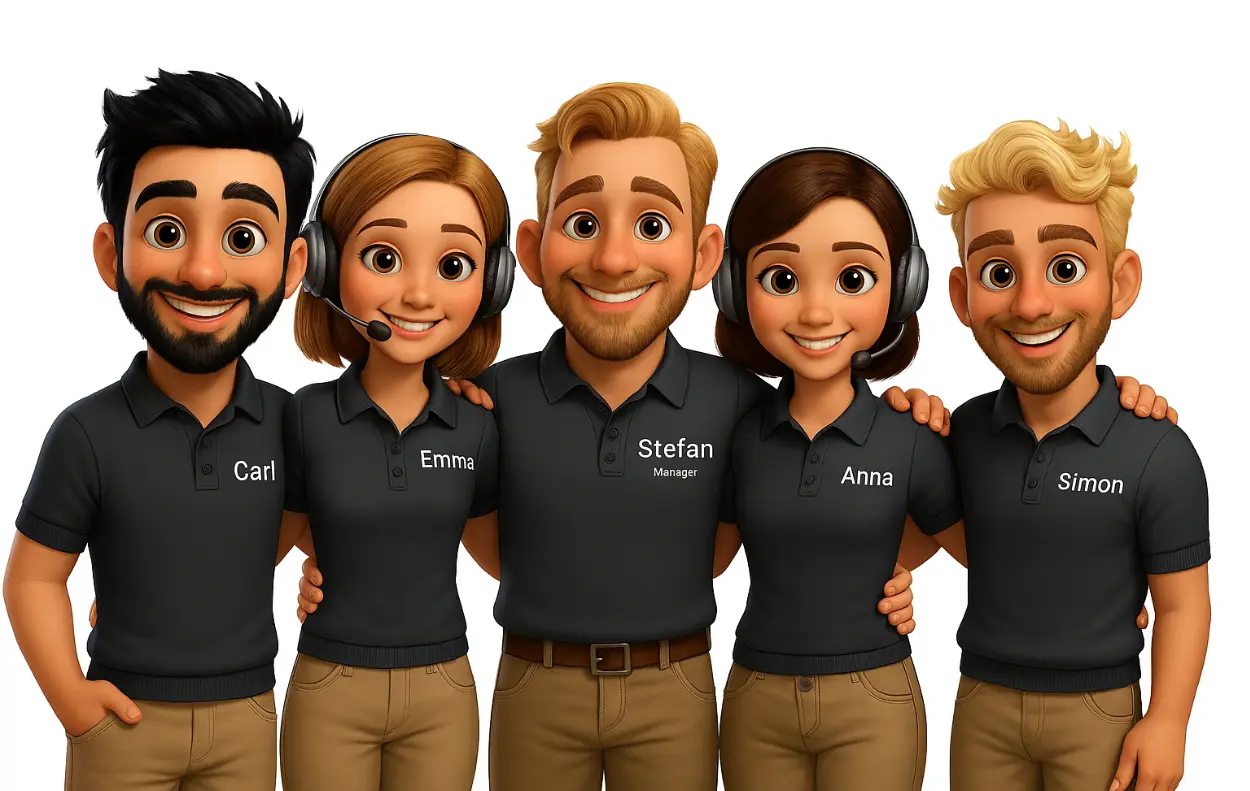
AI employees: the path to efficient growth in your business
Research, lead generation, content, onboarding and social media as AI employees: which ones exist, where they are used and what they save.
Read more
scoreprise
Blog
AI employees: the path to efficient growth in your business
Research, lead generation, content, onboarding and social media as AI employees: which ones exist, where they are used and what they save.
Read more
 scoreprise
Blog
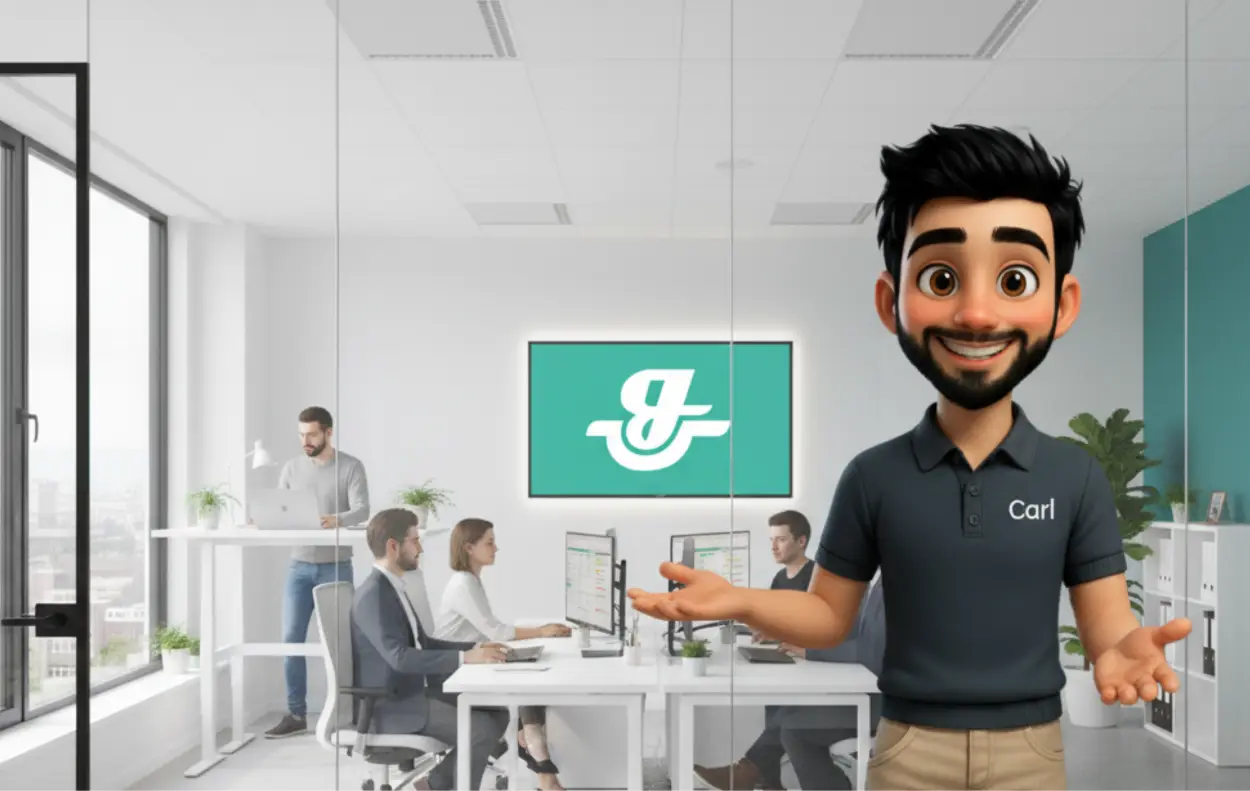
Carl: the AI sales assistant that improves your sales
Carl handles lead research, assesses product fit and decision-making authority and files a conversation guide in the sales cockpit, controlled by phone.
Read more
scoreprise
Blog
Carl: the AI sales assistant that improves your sales
Carl handles lead research, assesses product fit and decision-making authority and files a conversation guide in the sales cockpit, controlled by phone.
Read more
 scoreprise
Blog
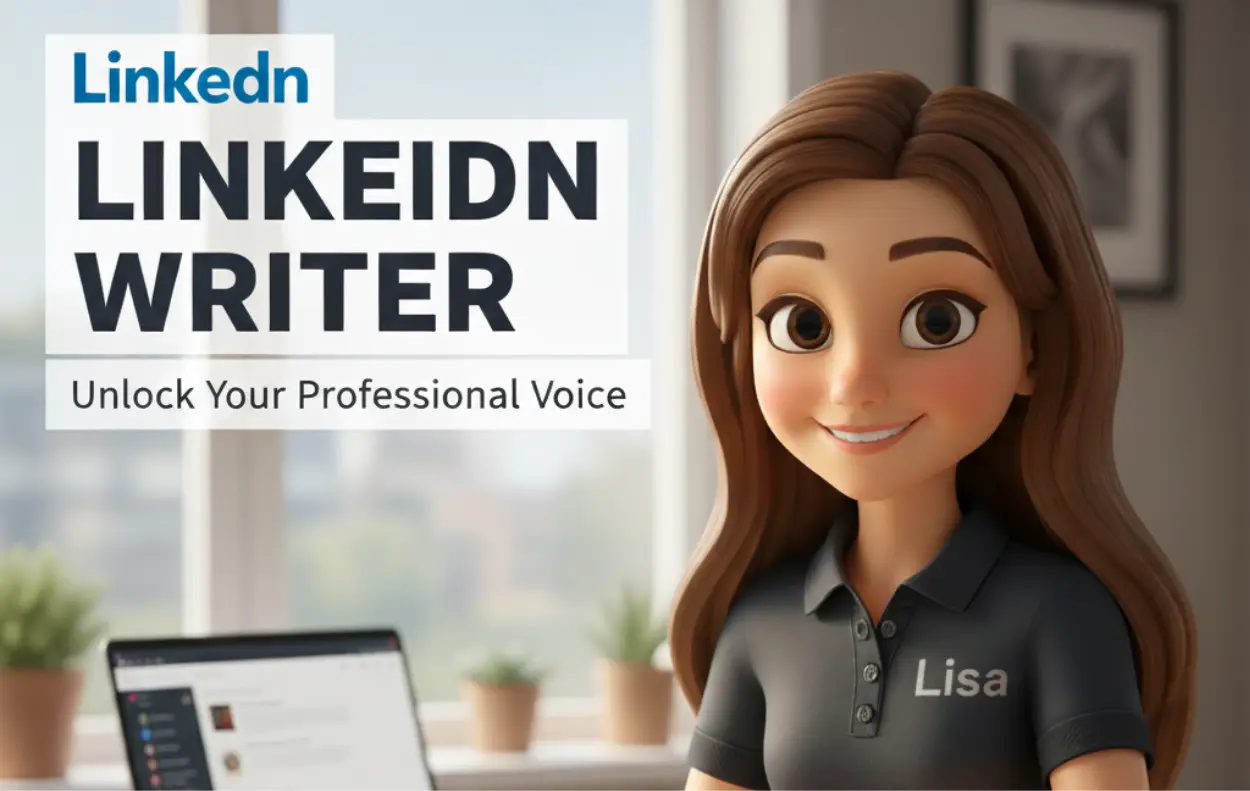
Lisa, LinkedIn writer in the social media team
Lisa writes LinkedIn posts in the AI social media team: data-driven topics, personalisation and a check against synthetic readers before publishing.
Read more
scoreprise
Blog
Lisa, LinkedIn writer in the social media team
Lisa writes LinkedIn posts in the AI social media team: data-driven topics, personalisation and a check against synthetic readers before publishing.
Read more